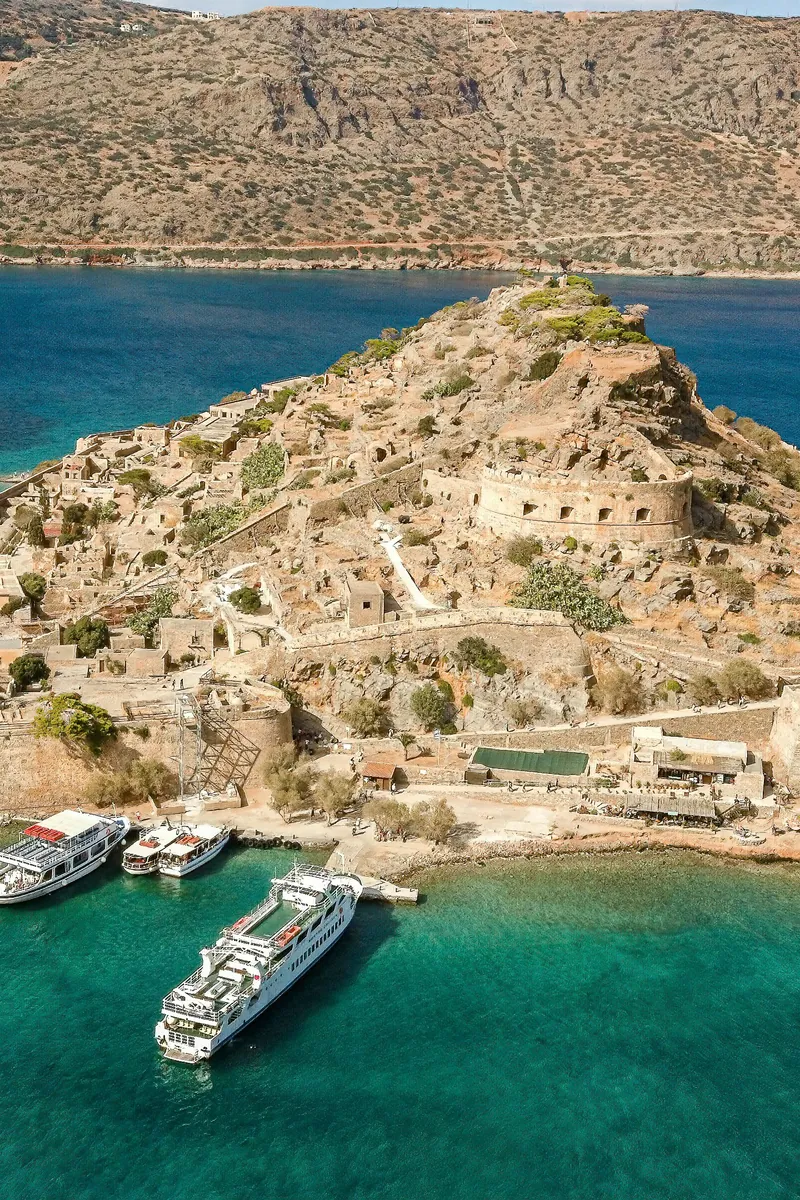
Spinalonga is a small fortified islet in the Gulf of Elounda, off the north-east coast of Crete in the region of Lasithi, and few places pack so much history into so little ground. Known in antiquity as Kalydon, the rock guards the entrance to the sheltered bay of Elounda, and its natural strength made it a stronghold long before it took its present shape. In 1579 the Venetians, who then ruled Crete, raised a formidable sea-fortress here, wrapping the islet in massive bastioned walls designed to command the approaches to the coast and to hold out against the Ottoman advance. So strong were the defences that Spinalonga remained in Venetian hands for decades after the rest of Crete had fallen, surrendering only in 1715.
Under Ottoman rule the fortress became a settlement, and a Muslim community lived within the walls through the eighteenth and nineteenth centuries, building the houses and lanes whose remains still climb the slope. But it is the twentieth century that gives Spinalonga its most powerful and moving story. From 1903 until 1957 the island served as a leprosy quarantine settlement — Greece's last leper colony — to which people diagnosed with Hansen's disease were sent from across Crete and, later, the wider country. Cut off by the water, the residents built a community of their own behind the old walls, with a main street, shops, a church and a hospital, living out their days on the island until a cure made the colony unnecessary and it was finally closed.
That layered past — Venetian fortress, Ottoman village, and the dignified, self-sustaining community of the quarantine years — reached a wide international audience through Victoria Hislop's best-selling novel The Island, and the television series based on it, which drew new generations of visitors to the rock. Today Spinalonga is an uninhabited monument reached only by boat, from Plaka, Elounda or Agios Nikolaos. Visitors enter through the vaulted tunnel long nicknamed Dante's Gate, then follow a walking route past the colony buildings and around the fortress walls, with panoramic views over the Aegean at every turn. Because the island is small, exposed and busy in season, we handle the ticketing in your own language and reserve the hourly slot you want, so your admission is settled before you ever step aboard the boat.